
• Kia PV5 gets bigger, bolder… and chillier

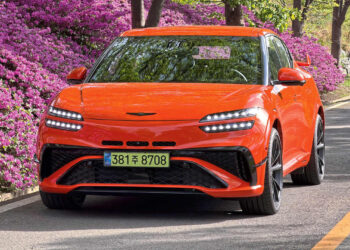
    Kia PV5 gets bigger, bolder… and chillier


    New additions open up more possibilities for the striking electric van, with a tipper and clever five-seater on the way


    Source link

  • MG’s IM eyeing faster sales growth with new models and premium play

    MG’s IM eyeing faster sales growth with new models and premium play


    A modest start in Australia will not perturb MG’s IM premium brand as it gears up for new products and a fresh marketing push.

    MG’s IM premium sub-brand believes it can succeed where the likes of Denza and Zeekr are playing, but it will need more products and more marketing to get there.

    Having launched in Australia in August 2025 with the IM5 sedan and IM6 SUV – both all-electric models – MG has sold 754 combined IM models so far in Australia.

    Speaking to Drive, IM Motors regional general manager for Asia Pacific Steven Xu said momentum is building for the brand, but work is still needed to be where it wants in the local market.

    “We think we should definitely do better, and in the past March, we achieved a three-times sales volume increase,” Xu said.

    MORE: MG IM5 and IM6 owners set for upgrade before updated cars arrive

    “That’s good news for us, and it seems like a lot of people working to get a lot of inquiries from a lot of customers to IM.

    “Because IM, right now, according to customer feedback – the driving experience, the driving quality – is amazing, they all like the car.”

    While IM’s 2026 sales figure to the end of April of 330 units is modest, it is close to Genesis’ 464 tally, despite the latter fielding five models with petrol and electric options.

    However, Denza (with a three-model line-up) has found 1131 customers for far this year, while the bulk of Zeekr’s 2838 sales are for the IM6-rivalling 7X (2698).

    MORE: MG’s premium IM brand set for major model expansion

    To build momentum, IM will release an updated version of the IM5 and IM6 in the second half of the year – about 12 months after the models first arrived in local showrooms.

    Existing customers, however, will be able to score some of the new features via an over-the-air (OTA) software update, but it still remains unclear whether they will need to pay to upgrade.

    In the first half of 2027, IM will also release its first large SUV with the LS8 – or IM8 as it is expected to be called in Australia.

    The range-extender powertrain will stand it apart from the all-electric IM5 and IM6, which is expected to give it a broader appeal.

    MORE: Australian feedback to dictate whether IM LS9 launches Down Under

    Xu said a new marketing initiative will also be launched to try and raise awareness of the brand, but he ultimately believes IM can co-exist alongside Denza and Zeekr due to its unique characteristics.

    “I think we just will enhance this positioning that IM should be the best driving experience in this country, and in the future we will develop the digital chassis version 2.0 or 3.0,” Xu said.

    “IM will build a fantastic driving EV in this market, and I think customers are willing to pay more money for this value – I’m definitely sure of that.

    “Denza and Zeekr, I think they do a very well job, and we hope we can get more opportunities to the Australian customer to choose – like you want the interior or you like the outlook or you want driving experience that the handling and manoeuvrability, we just provide diversity features to the customer.”

    The post MG’s IM eyeing faster sales growth with new models and premium play appeared first on Drive.


    Source link

  • BYD Seal U review | Auto Express

    BYD Seal U review | Auto Express


    “The Seal U doesn’t have a great towing capacity. In two-wheel drive form, it can only manage a braked trailer of 750kg, while the 4×4 is rated to pull up to 1,300kg. That’s not much for owners who want to pull a decent-sized trailer or caravan, so they’ll be better served by the Ford Kuga PHEV, as this manages up to 2,100kg.”Shane Wilkinson, senior content editor.

    Advertisement – Article continues below

    A strong safety score and long warranty should help to give buyers peace of mind

    Pros

    • Five-star safety score
    • Long standard warranty

    Cons

    • BYD’s Driver Power scores make for grim reading

    While BYD is still a relative newcomer to the UK market, it’s been building cars in China for decades. The Seal U benefits from this experience, as well as sharing parts with other models in the firm’s current line-up.

    Euro NCAP tested the Seal U in 2023, and the car earned a five-star safety rating. It had strong scores across the board, while standard equipment includes front and rear cross-traffic alert, blind-spot detection, lane-departure prevention, adaptive cruise control and three sets of Isofix child-seat mounts. 

    The Seal U was marked especially highly for its assistance systems, and better still, the firm’s engineers have tweaked some of these features to be easier to turn off and less intrusive than their applications in the other BYD models we’ve tested.

    BYD has plenty of room for improvement in the Driver Power owner satisfaction survey, though, as it wound up in a disastrous 30th place out of 31 in brands in the best manufacturer rankings. The only carmaker to put on an even worse performance was MG.

    Euro NCAP safety ratings
    Euro NCAP safety rating  Five stars (2023)
    Adult occupant protection 90%
    Child occupant protection 86%
    Vulnerable road user protection 83%
    Safety assist 77%
    • Best buy: BYD Seal U DM-i Comfort

    The mid-level Comfort trim is our pick of the bunch because it brings a larger battery and some useful additional kit for a modest outlay. It doesn’t have four-wheel drive, but this is difficult to justify in a vehicle intended for on-road use.

    BYD Seal U alternatives

    The BYD Seal U arrives in a market awash with SUVs of many shapes and sizes, and there are even many plug-in hybrid and hybrid SUVs to choose from for low running costs. However, with its mix of generous exterior dimensions and attractively low price, the Seal U attracts rivals from various classes.

    For instance, in terms of interior space, the BYD is closely matched to established plug-in models such as the Honda CR-V, Toyota RAV4 and Ford Kuga.

    Yet consider the car’s pricing and the list of competitors is stretched to include the Hyundai Tucson and Kia Sportage, which both have plug-in options, as well as more traditionally-powered machines such as the Nissan Qashqai and Skoda Karoq.

    Advertisement – Article continues below

    Key updates of the BYD Seal U review

    Frequently Asked Questions

    BYD offers a generous six-year or 93,750-mile warranty on all of its cars. The battery pack has a separate policy of eight years or 125,000 miles, which guarantees that the battery will maintain above 70 per cent of its capacity over that period. The bodywork is warranted for 12 years against corrosion.


    Source link

  • New Mercedes C-Class Electric revealed: exec EV gets 472-mile range and 482bhp

    New Mercedes C-Class Electric revealed: exec EV gets 472-mile range and 482bhp


    The C-Class Electric’s figure isn’t as impressive, but just like the new GLC Electric, there’s a 94.5kWh battery sending power to a dual-motor set up for a range of 472 miles in C 400 guise. Comparisons will be made with the new BMW i3, which also launched with a dual-motor and 559 miles of range, although that car has a larger 112kWh battery. Mercedes also says there will be a less powerful single-motor version of the C-Class Electric, which will provide up to around 497 miles. “Various battery variants” will arrive in 2026, too, which we expect to be smaller-battery models with less range at a lower price point.

    Advertisement – Article continues below

    The C-Class Electric will have a 330kW maximum charge rate, thanks to its 800V architecture. Rather than claiming a 10 to 80 per cent top-up time, Mercedes says 198 miles can be added in 10 minutes.

    Unlike early versions of the CLA, which sits on another new Mercedes platform called ‘MMA’, the C-Class Electric is offered with an optional DC converter so it can charge at 400V fast-charging stations. 

    If you can’t wait for the Mercedes C-Class Electric to arrive, you can a buy a new petrol or diesel-powered Mercedes C-Class with up £3,500 off through our Buy a Car service

    How fast is the new Mercedes C-Class Electric?

    Jörg Burzer, Mercedes chief technology officer, says the C-Class Electric is the “sportiest C-Class we have ever built”. It certainly has enough oomph, because it’s powered by the same 482bhp dual-motor system as the one fitted to the GLC Electric, so the C-Class Electric sprints from 0-62mph in 4.1 seconds. Acceleration figures for its BMW i3 rival haven’t been revealed yet, although the Mercedes should be the quicker car, because it has 20bhp more and an expected lower kerbweight. The upcoming single-motor, rear-wheel drive variant will have less power.


    Source link

  • Chinese car brands are expected to work with Euro NCAP on new safety standards

    Chinese car brands are expected to work with Euro NCAP on new safety standards


    Tung Nguyen has been in the automotive journalism industry for over a decade, cutting his teeth at various publications before finding himself at Drive in 2024. With experience in news, feature, review, and advice writing, as well as video presentation skills, Tung is a do-it-all content creator. Tung’s love of cars first started as a child watching Transformers on Saturday mornings, as well as countless hours on PlayStation’s Gran Turismo, meaning his dream car is a Nissan GT-R, with a Liberty Walk widebody kit, of course.

    Read more about Tung NguyenLinkIcon


    Source link

  • Cupra Terramar review | Auto Express

    Cupra Terramar review | Auto Express


    Two lines of shortcuts are located across the top and bottom of the display to help you navigate the system, with the bottom row dedicated to the climate system. The temperature controls are sliding items as found on other VW Group models, and they flank a volume control. They are still a bit tricky to use, even though they are now illuminated, with the volume function being much easier to operate via the steering wheel.

    There’s a digital dashboard that offers four different display modes, although some options bury the speedometer in the corner of the layout. This isn’t an issue in cars fitted with the head-up display, but you might want to switch to a setting that makes it more prominent, our favourite one being the large central rev counter with the speedo in the centre. 

    There are four USB-C sockets in the cabin – two up front, two in the rear – while a wireless charging pad is also fitted across the range.

    “The Terramar’s cabin looks smart and features plenty of tech, and we’re glad that physical buttons have been fitted to the steering wheel, rather than haptic controls. If you’re not a fan of speed-limit warnings, it’s simple enough to press a button on the wheel, then scroll to the alert and deactivate it.”Dean Gibson, senior test editor. 

    Sporty looks come at the expense of outright space, but there’s still decent passenger room

    Pros

    • Comfortable sports seats up front
    • Good legroom in the rear
    • Sliding back seats

    Cons

    • High boot loading lip
    • e-Hybrid has no space under the boot floor
    • Not quite as spacious as a VW Tiguan inside

    The sole body option for the Terramar is a five-door compact SUV – there’s no coupe-SUV alternative, but we don’t think you need it because the standard model looks pretty sporty already. There’s room for five inside, while a sliding rear bench offers the option to prioritise passenger or boot space.

    Dimensions and size

    The Terramar is larger than the Cupra Formentor, but it’s not quite as long as the platform-sharing Volkswagen Tiguan, although both have a similar wheelbase. A lower roof line gives the Terramar a sportier look, but this doesn’t come at the expense of interior headroom.

    Dimensions comparison 
    Model Cupra Terramar Volkswagen Tiguan Mazda CX-60
    Length 4,519mm 4,539mm 4,745mm
    Width  1,863mm 1,842mm 1,890mm
    Height 1,584mm 1,660mm 1,680mm
    Wheelbase 2,681mm 2,676mm 2,870mm
    Boot space  540 litres (400 litres E-Hybrid) 652 litres (490 litres eHybrid) 570 litres

    Seats & passenger space

    All versions of the Terramar feature sporty looking front seats with wide wings. However, unlike in some dedicated sports cars, these are broad enough so that they feel as if they wrap around you, but aren’t tight, and deliver good comfort as a result. Lower-spec cars have cloth upholstery, while in the mid-range there’s a Dinamica microfibre finish, and top-spec cars get burgundy leather with copper stitching that looks more attractive than it sounds.

    Advertisement – Article continues below


    Source link

  • Car Deal of the Day: Geely Starray twinkles at under £200 a month

    Car Deal of the Day: Geely Starray twinkles at under £200 a month


    • The cheapest PHEV currently available
    • High equipment levels; 51-mile EV range
    • Only £199.93 a month

    Leasing prices for the Geely Starray continue to slip, with the most affordable deal now £15 cheaper than when we last featured it as our Deal of the Day. You can now get behind the wheel for just under £200 a month, which makes this the cheapest plug-in hybrid around – and by some margin.

    Through the Auto Express Buy A Car service, Leasing Options is offering the Chinese SUV on a three-year deal for a bargain £199.93 a month after an initial payment of £2,799.15. 

    Advertisement – Article continues below

    If you’d rather pay less up front, you can select a nine-month initial payment instead of 12, which comes to £2,314.92, with the monthly price still coming to a very reasonable £212.77.

    Mileage is capped at 5,000 a year, but you can raise this to 8,000 for an extra £11 a month on the 12-month initial payment deal, and £12 on the nine-month.

    Geely might appear to be a new name on the block, but unlike the vast majority of the newcomers from China it has actually been here for quite some time – you just wouldn’t know it. It owns household names like Volvo and Lotus, and even has the keys to the firm that builds London’s black cabs.


    Source link

  • 2026 BYD Atto 3 Evo confirmed for Australia later this year

    2026 BYD Atto 3 Evo confirmed for Australia later this year


    A technical overhaul and styling update for BYD’s popular small SUV is coming to Australia soon, but an all-new model shown in China looks to be some time away.

    A significant upgrade to BYD’s first high-volume car in Australia, the Atto 3 small electric SUV, is on track for Australian showrooms by the end of the year.

    An all-new version of the BYD SUV sold in Australia as the Atto 3, the Yuan Plus, was revealed in China last month with a significantly larger body, longer range, and ultra-fast charging.

    While the new Yuan Plus is reportedly destined for New Zealand as the Atto 5, it is yet to be locked in for Australia, where the brand is about to launch a heavy update of the current Atto 3, branded Evo.

    “We’re just working through that as we speak. Stay tuned for that, but [it’s] most likely [due in the] second half of the year,” BYD Australia chief operating officer Stephen Collins told Drive, when asked about Atto 3 Evo plans in recent weeks.

    MORE: 2026 BYD Atto 3 Evo revealed, approved for Australia

    The Atto 3 Evo switches the small SUV from front-wheel drive to rear-wheel drive, and adds an all-wheel-drive option for the first time, in conjunction with a larger battery for a longer range.

    Prices are yet to be confirmed for Australia, but it may command an increase over the $39,990 to $44,990 plus on-road costs of the current Atto 3 Essential and Premium.

    It is possible BYD could keep RRPs similar, given the price of today’s Atto 3 was set in early 2025, nine months before the Atto 2 arrived for $31,990 to $35,990 plus on-roads, as well as other Chinese EVs offering Atto 3 Premium-like features for less than the Essential.

    The rear-wheel-drive Atto 3 Evo uses a single 230kW/380Nm motor on the rear axle – up from 150kW/310Nm on the front axle in today’s Premium grade – claimed to be good for zero to 100km/h in 5.5 seconds.

    MORE: BYD Atto 5 on the way for New Zealand, could be on track for Australia

    All-wheel drive adds a front electric motor for 330kW and 560Nm combined, and a claimed 3.9-second 0-100km/h sprint.

    Driving range ratings have risen from 340km and 420km in the outgoing Atto 3, from 49.9kWh and 60.5kWh batteries, respectively, to 510km with RWD and 470km with AWD from a 74.8kWh pack.

    DC charging has also improved, now capable of accepting up to 220kW for a 10 to 80 per cent recharge in a claimed 25 minutes, down from more than 40 minutes in Drive testing of the outgoing Premium.

    Styling changes include new front and rear bumpers, restyled silver 18-inch alloy wheels, Dolphin hatch-esque tail-light signatures, slimmer side skirts, a new rear window pillar garnish, and a sportier rear spoiler with twin brake lights.

    MORE: BYD Atto 1 not cutting Dolphin’s lunch as sales ramp up

    Inside, the centre console has been reshaped to fit a ventilated wireless phone charger – and move the gear selector to a steering column stalk – while the steering wheel and seats have been reworked.

    The carry-over 15.6-inch infotainment display in European models now incorporates Google functions for maps, alongside a new 8.8-inch instrument display.

    Boot space has grown by 50 litres, a 110-litre under-bonnet storage area has been added, and more advanced five-link rear suspension, up from four-link, to improve driving dynamics.

    More details of the 2026 BYD Atto 3 Evo are due closer to its local arrival by the end of this year.

    The post 2026 BYD Atto 3 Evo confirmed for Australia later this year appeared first on Drive.


    Source link

  • New Mercedes GLB Electric 2026 review: a big leap forward from the old EQB

    New Mercedes GLB Electric 2026 review: a big leap forward from the old EQB


    Meanwhile, there are four levels for the regenerative braking including a very firm ‘strong’ mode that allows for one-pedal driving – which is great in town – and an adaptive ‘intelligent’ mode for those who aren’t used to regen yet and just want to ‘set it and forget it’.

    Interestingly, the new GLB is able to receive data from other suitably equipped Mercedes on the road and will warn the driver of any potholes or large imperfections in the road coming up, which it does so by sporadically saying the word “bump”. If you still go over one, this can send a noticeable thump into the cabin, but the suspension does a very good job of absorbing the impact. 

    The car does fidget slightly too, but overall it feels like a composed SUV. Combined with only a small amount of road and wind noise penetrating into the cabin, the GLB is a soothing and calm place, as you’d expect a family car or indeed a Mercedes to be.

    If you get bored of the quiet, the EV also gets ‘sound worlds’ to accompany the driving experience with some of the most bizarre names imaginable including Vivid Flux, Roaring Pulse and our personal favourite, Granular Fuzz, which makes it sound like you’re being chased by a swarm of angry hornets, which is sure to amuse your passengers. 

    The new Mercedes GLB is on sale now, with prices starting from £42,070 for the hybrid version and £46,100 for the EV. That makes it more expensive than compact premium SUVs including the BMW X1 and Audi Q3, but they don’t have seven seats or full-hybrid tech as standard. The same goes for the similarly sized X3 and Q5, which both start from over £53k.

    The GLB Electric’s most direct rival is the Tesla Model Y 7-Seater, but that costs nearly £55k and has a very similar range of 372 miles.  

    Prices for a fully loaded GLB can reach around £60k, which puts the new EV in the same price bracket as the larger, even more advanced Mercedes GLC Electric or BMW iX3 that offer more range, too. Picking between them simply comes down to whether you really need seven seats or not, but if you do, the Mercedes GLB is a compelling option. 

    Model: Mercedes GLB 250+ Electric AMG Line Premium
    Price: £53,700
    On sale: Now
    Powertrain: 85kWh battery, 1x e-motor
    Power/torque: 268bhp/335Nm
    Transmission: Two-speed automatic, rear-wheel drive
    0-62mph: 7.4 seconds
    Top speed: 130mph
    Range: 363 miles
    Max. charging: 320kW (10-80% in 22 mins)
    Size (L/W/H): 4,728/1,860/1,689mm


    Source link

  • China’s Lepas car brand is planning a MINI-beating premium supermini

    China’s Lepas car brand is planning a MINI-beating premium supermini


    The Chery-owned Lepas brand has revealed plans to bolster its range to five distinct models over the next two years, confirming both an A-segment city car and D-segment SUV are in the pipeline.

    The model blitz was confirmed at the launch event for the Lepas L6 SUV in Milan this week. Offered in petrol, hybrid and electric forms, the L6 is a rival to the Nissan Qashqai and Kia Sportage, and will sit alongside the longer, larger L8 when it arrives in the UK later this year. 

    The L6 and L8 will soon be joined by the smaller L4, a B-segment alternative to cars such as the Ford Puma and Toyota Yaris Cross. With a choice of petrol, hybrid, plug-in hybrid and fully electric power, the L4 will offer the broadest powertrain line-up in the Lepas portfolio.

    Advertisement – Article continues below

    Lepas forms part of parent company Chery’s house of brands, which also includes Jaecoo and Omoda. The Jaecoo 7 was the UK’s best-selling car in March, and is currently available to lease through Auto Express Buy a Car for less than £300 per month. Chery is also planning to launch its Exceed luxury arm in Europe in the not too distant future.

    After the L4, Lepas will turn its attention to another SUV, most likely with seven seats. Expected to utilise the L9 badge, the firm will look to this model to cement its premium aspirations in Europe – presumably with its sights set on models such as the Hyundai Ioniq 9 and forthcoming Skoda Peaq. It will be available with both plug-in hybrid and pure-electric powertrains.

    The final piece to Lepas’s European puzzle, at least for the time being, will be a city car or supermini designed to rival premium small cars such as the MINI Cooper and upcoming Volkswagen ID. Polo. It too will be offered with electric and hybrid powertrains – although given segment preference and consumer buying habits, the latter will not come with a plug.

    Lepas range expansion

    Brit Peter Matkin (pictured), who is head of engineering for the Chery Group, said: “Europe is a natural market [for Lepas] to enter. We balance performance and drivability with design and usability.” The cars are said to have been tuned specifically for European roads, with a “human-centric” approach to engineering.

    The L4 should launch later this year, but timings for the two future models are still to be determined. It’s understood that Lepas hopes to complete its range within two years, with the large SUV expected before the upmarket supermini.

    Did you know you can sell your car through Auto Express? We’ll help you get a great price and find a great deal on a new car, too.


    Source link