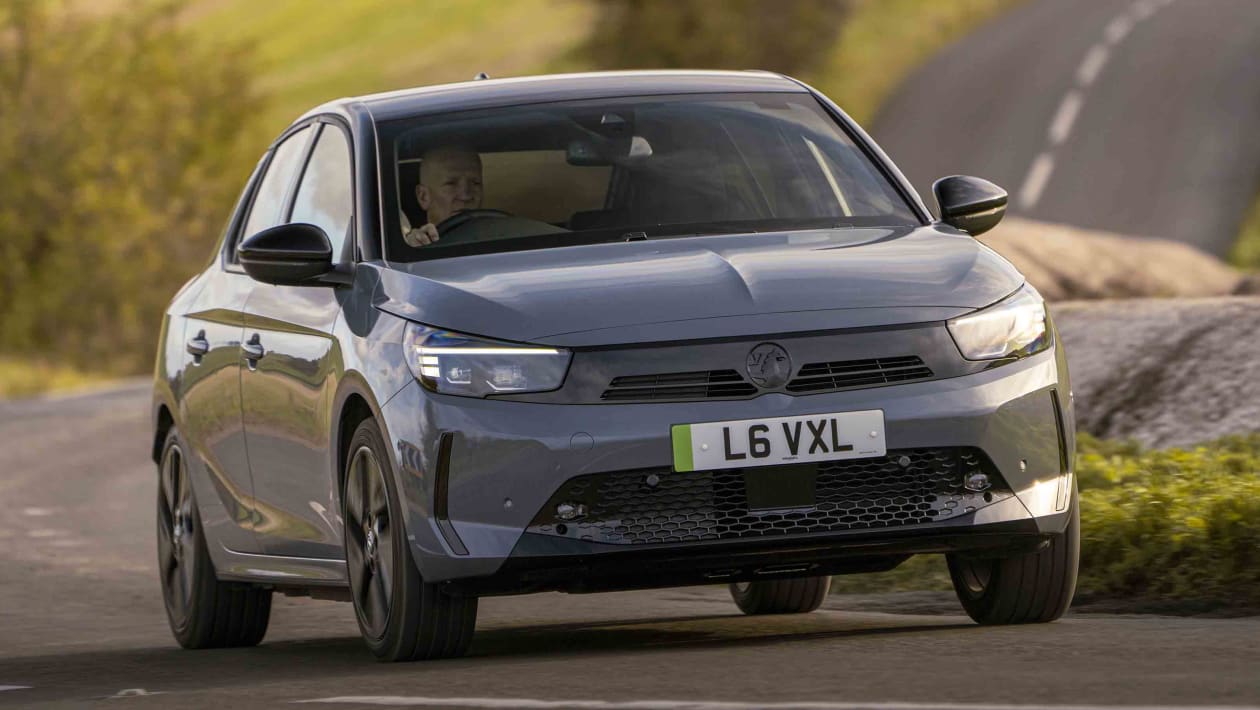
Three trim levels are available: Yes, GS, and Ultimate. Entry-level Yes includes LED lights, 16-inch wheels, rear parking sensors, climate control, a 10.0-inch infotainment touchscreen with Apple CarPlay and Android Auto, heated front seats and steering wheel, and rear privacy glass.
Our preferred GS trim adds:
- 17-inch alloy wheels
- Front and rear parking sensors with a panoramic reversing camera
- Sat-nav
- Blind spot monitoring
- Wireless phone charging
- Keyless entry and start.
Top-of-the-range Ultimate cars are fitted with Matrix LED headlights, adaptive cruise control, driver’s seat massage, and a lane positioning aid.
Interior and dashboard design
The straightforward interior layout of the Corsa Electric gives you little clue as to the car’s powertrain. The only giveaway is that a seven-inch digital driver’s display replaces the conventional dials used in other Corsa models. Some will like how simple the cabin is, but in our opinion, it’s a shame there’s not at least a little more flair, something the E-208, which the Corsa Electric shares its platform with, has in spades.
We do, however, appreciate that you get physical controls for the standard climate system, which is a lot easier to use on the move than the screen-based system found on the E-208.
Materials and build quality
Like the regular Corsa, the Corsa Electric has a robust, rather than premium interior, unlike what you’ll find in a Peugeot E-208. It’s also not a particularly colourful interior, no matter which version you go for. The entry-level Yes trim can be had with a flash of red across the dash, but it’s not enough to lift what is a fairly gloomy interior.
Infotainment, sat-nav and stereo
As standard, you get a 10-inch touchscreen packed with features, but it can sometimes feel a bit slow to respond. It is fairly straightforward to navigate, making it easier to live with than the rather fiddly menu layout used in the MG4. However, it’s no match for the Google-based infotainment system used by the Renault 5, which has a much clearer layout, speedier response times, and the ability to use Google’s voice recognition software to program in navigation destinations.