“I’m sure you will recognise it as a real Dacia. It was important to differentiate completely [new Spring] from Renault and not have a similar offering with the two brands. It would make no sense because we will start to compete and this is not at all what we want to do.”
The designers have been able to separate the two visually by using plenty of clever tricks. The first is the Dacia’s taller and more defined bonnet, which gives it a more conventional two-box silhouette.
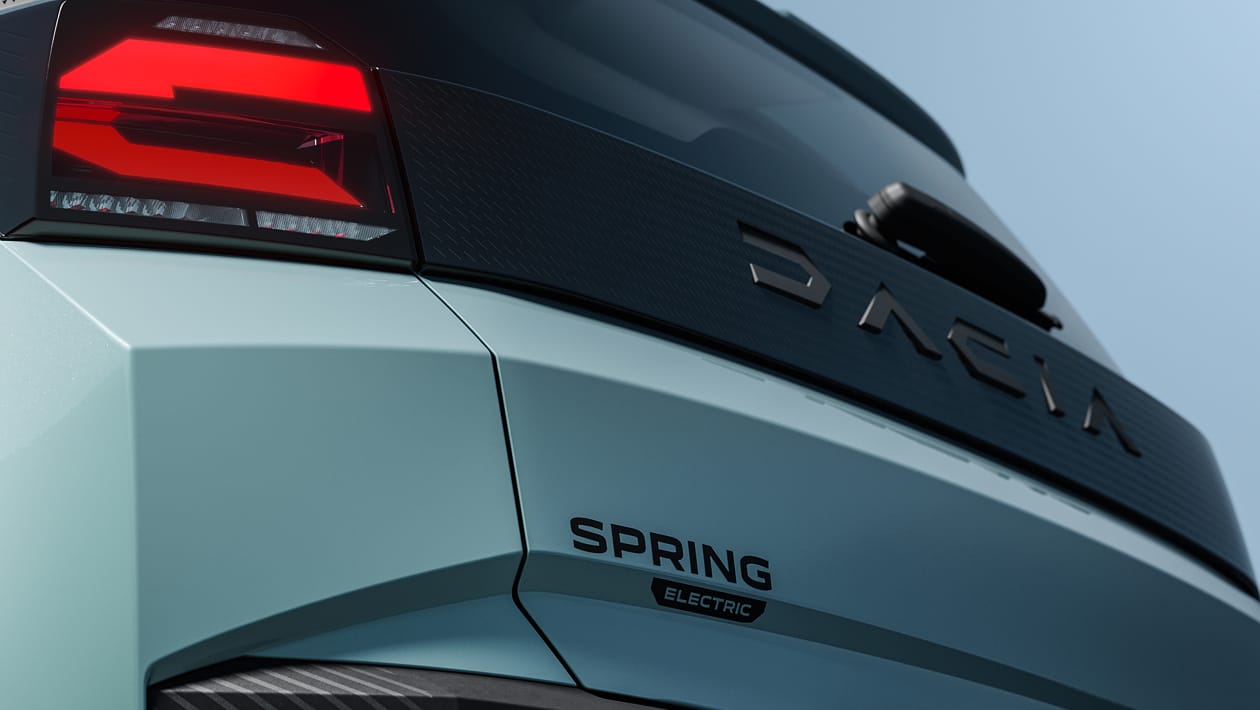
Beneath the new bonnet are a pair of boxy LED headlights that’ll probably be joined by a large grille-like graphic as seen on other Dacia models. However, while the nose will be quite different in design, the side windows look to be carried straight over from the Renault, including the pop-out openings for the rear glass. At the back, expect similarly high placements for the rear lights, but these will be squarer and more conventional in design than the Twingo’s clever LED hoops.
Inside, we expect the pair to share their dashboard layout and general design, however Dacia will utilise its less colourful palette of recycled materials. The digital interfaces are also to be shared and should include a digital driver’s display paired with a Google-based 10-inch touchscreen. One of the Twingo’s iconic elements, the movable twin rear seats, could be reverted to a more traditional bench in order to help keep a cap on the Dacia’s costs.
What battery and motors will be fitted?
As well as the shared basic structure, Dacia’s plan to keep costs low will include the direct carry-over of the Twingo’s electric motor and battery layout. This means we’re expecting to see a 27.5kWh battery pack combined with an 80bhp electric motor mounted on the front axle. It’s far too early to be specific about range or performance, but it should broadly match the Twingo’s 163-mile electric range, and 50kW DC charging speed.