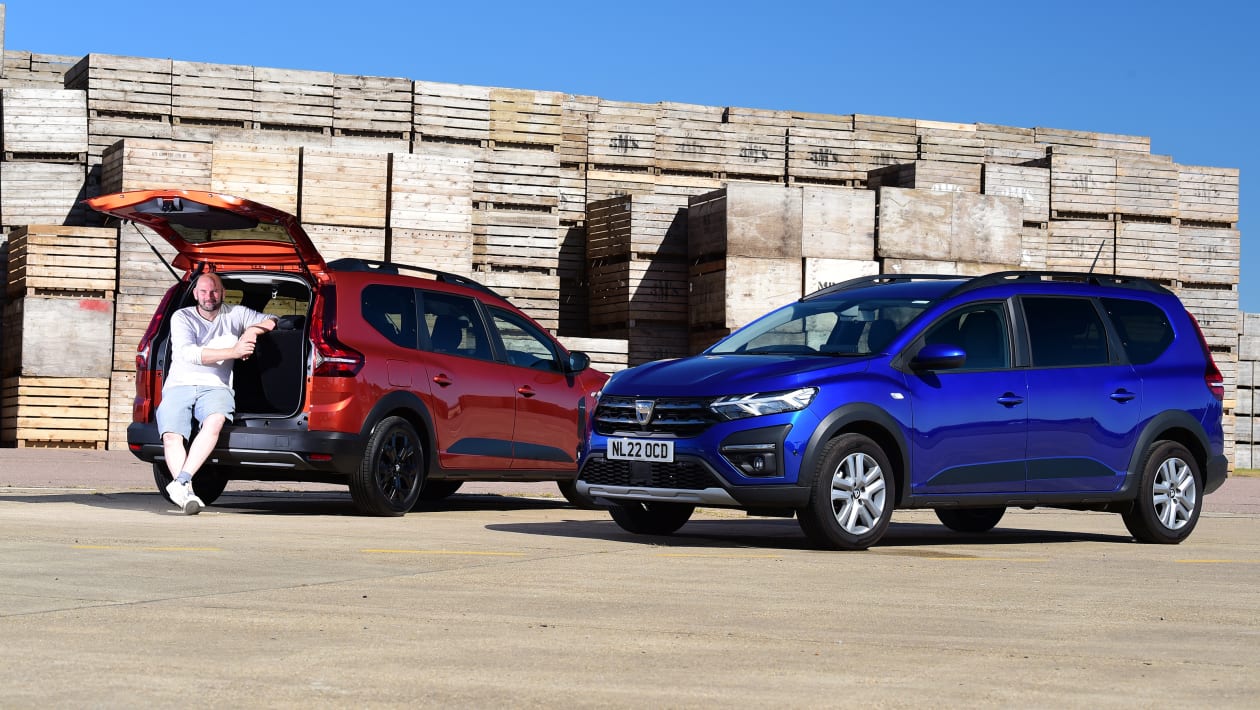
• Dacia Jogger: long-term test review

    Dacia Jogger: long-term test review


    Verdict

    In terms of value for money, our Jogger is a brilliant, five-star car all day long. My only reservation is the slight compromises to keep things affordable. I love my music and want to hear it through the best system I can possibly afford.

    • Mileage: 2,900
    • Economy: 43.1mpg

    When you start running a new car from the Auto Express fleet and the first serious journey you make is driving the car to our annual New Car Awards photoshoot, you know you’re on to a winner – quite literally! The Jogger scooped the Best Family Car award for 2022, and it was even in with a shout of taking our full New Car of the Year gong, only to be pipped by the Nissan Ariya.

    It’s easy to see why the Dacia was in contention; it’s impressed me from day one. I was already aware of the brilliant, flexible seating, having tested an example back in March. I can fit seven into the car if needs be, and I’m not talking about squeezing them in either; I’m a chunky six-footer and can easily sit in either of the back two seats. The stepped roofline and sculpted ceiling really help here, and the legroom is decent enough, too. Getting there isn’t the most graceful procedure, though, because I need to fold the rear bench forward and then wriggle into the rear quarters.

    More reviews

    Car group tests
    In-depth reviews
    Road tests

    Both of the third-row seats can come out altogether, but there is little point in removing them, because they can both fold forward to sit against the back of the middle row of seats. This added flexibility means I can run the car like a conventional five-seat hatchback and shift bigger loads in the boot or choose to carry six people with enough space for a buggy. It’s all very clever. 

    It’s also good to drive, if not spectacular. I’ve found the Dacia’s suspension a bit bumpy on urban potholes and speed humps, but have been impressed with the steering and handling. It feels like a small car when driving around town, rather than an SUV or estate. The 1.0-litre engine does sound a bit industrial, especially after driving an EV for the last six months, but I had forgotten how much I enjoy a manual gearbox. 

    Our Jogger’s six gears make it great for motorways, although most of my journeys have been town-based. I’m currently getting 43.1mpg with little effort – not bad considering the very heavy lifting the air-con has been doing recently.

    But the main way the Jogger has won me over is with its standard kit. I like to play a game where I give family or friends a lift and talk them around the gadgets in the car, then get them to guess the overall price.

    So far, guesstimates range from £24,000 to £36,000 – almost twice the actual figure of £17,840 (including £895 of options). Passengers are amazed. To be fair, these guesses came from friends who aren’t car fanatics, but the truth is that there isn’t too much in the cabin to give away that Dacia is a budget brand. Much of the switchgear comes from sister brand Renault, with some of it resembling that in the Clio supermini.

    Dacia has been so clever choosing just the key tech buyers actually want, which keeps it cheap. I was surprised to find our Jogger came with front and rear parking sensors and a reversing camera, cruise control, active braking and blind-spot warnings. The remote locking activates as you walk up to the car, which is handy when carrying a baby or shopping (both on my weekly list of tasks). The steering wheel has controls that let you switch to a digital speed reading – easier to glance at than the old school dials – plus mpg readouts on the infotainment screen. 

    This mid-tier Comfort trim – the closest equivalent is now Expression following a range tweak – misses out on built-in nav. You get it in the Extreme SE, but when Apple CarPlay is standard, I don’t think the extra £800 for the top trim is worth it.

    So are there any drawbacks? Well, as with all things in life you get what you pay for. Being lucky enough to drive new cars all the time, I’m used to a certain level of tech and the Dacia’s sound system is a little tinny, while the DAB radio can lose signal. Otherwise, I’m happy. I’ve always preferred ingredients-shopping in Aldi to Waitrose – it’s what you do with them that counts.

    Model:

    Dacia Jogger Comfort TCe 110

    On fleet since:

    June 2022

    Price new:

    £16,495

    Engine:

    1.0-litre 3cylinder, petrol turbo, 108bhp

    CO2/tax:

    131g/km/£165

    Options:

    Metallic paint (£595), Spare wheel (£300)

    Insurance*:

    Group: 15 Quote: £362

    Mileage:

    2,900

    Economy:

    43.1mpg

    Any problems?

    None so far

    *Insurance quote from AA (0800 107 0680) for a 42-year-old in Banbury, Oxon, with three points



    Source link

  • Best car headrest tablet holders 2022

    Best car headrest tablet holders 2022


    The days of relying on I Spy and a stack of comics to keep young passengers happy on car journeys are long over. Adults and kids alike demand electronic entertainment to keep them occupied, and this inevitably means using a tablet such as an iPad. This list of the best car headrest tablet holders includes products that could help alleviate arm-ache from propping them up and car sickness from looking down for extended periods.

    Mounts that fix firmly to the headrest of the seat in front of a rear passenger can cost just a few pounds, and are well worth it to stop the cries of boredom and “are we there yet?”. But if they squeak, rattle or fall off in the middle of a trip, you might wish you’d never bothered. Which of the seven we tested will be best at taking the tablets?

    How we tested them

    We tried the seven mounts with three tablets – a second-generation iPad, an iPad Mini and a Microsoft Surface Pro, both with and without covers, to see how securely they held them. 

    Points were awarded for the ability to shift between landscape and portrait views, and for ease of installing and removing the tablets, because you won’t want to be leaving them in the car when you reach your destination. Finally, we took into account the prices charged at the time of writing. 

    Verdict

    There’s no need to spend a fortune on a mount to keep your tablet secure on a long journey. The Travel Bear took the crown as a cheap solution that was easy to use and didn’t interfere too much with the front passenger’s headrest settings. The Tryone and Vidence are almost identical to each other and do a great job – just choose whichever is cheapest on whatever day you’re looking. The Lamicall is similar, but more expensive and not as versatile, while the pricey Targus is built to last.

    1. Travel Bear
    2. Tryone Car Headrest Holder 
    3. Vidence Car Headrest Mount

    Travel Bear

    The Travel Bear is made from an elasticated fabric that stretches over the entire front headrest. The tablet or phone sits in a transparent plastic pocket that allows touchscreens to function normally. It also has slits for charging cables. 

    Travel Bear holds the device securely, is squeak-free and is easy to use, even with heavy tablets. It doesn’t require any adjustment of the headrest, either – good for front-seat passengers. 

    The big drawback is that small children will not be able to reach the screen to control the device. That could mean parents have to stop the car, or hope the voice controls work. But if your kids have long arms or your car is small, the Travel Bear functions well.

    Buy now from Travel Bear Kid

    Tryone Car Headrest Holder

    • Price: around £12
    • Tablet size: 4.7-10.6 inches
    • Rating: 4.5/5
    • Contact: www.amazon.co.uk

    When the Tryone arrived, we noticed the box looked suspiciously like the Vidence’s. Apart from a few extra stickers; inside, they did indeed appear to be identical products. The Tryone is a great mount, and now costs less than the Vidence, so it moves up the leaderboard.

    In common with the Vidence, the Tryone has another advantage over most of the mounts here; the rubber-lined sprung clamps will also securely hold a smaller smartphone. This makes it suitable for journeys when a tablet isn’t available, or for teenagers who insist on staying in touch via their handset. 

    Buy now from Amazon

    Vidence Car Headrest Mount

    • Price:  around £14
    • Tablet size: 4.7-10.6 inches
    • Rating: 4/5
    • Contact: www.amazon.co.uk

    In the time since we last tested the Vidence it’s undergone a name change (it used to be called the Viden). It topped our tests previously and we had no trouble recommending it when it cost £8, but it doesn’t feel like it’s worth nearly double that – and that increase in price is magnified if you need to buy more than one unit.

    The Vidence relies on two spring-loaded clamps. One grips the tablet or phone, while the other slots in between the headrest mounting posts to provide a secure anchor point to the car. A double-jointed arm allows the device to be pulled back by up to 20cm, meaning it will be in reach of the child in most cars and they will be able to control the unit by tapping its screen. 

    There’s some wobbling when on the move if using a heavier tablet with the arm fully extended, but it means the screen’s distance can be adjusted to suit the passenger. A ball joint also allows the device to be tilted to the best angle for viewing. 

    Buy now from Amazon


    Lamicall Car Headrest Mount

    • Price:  around £12.99
    • Tablet size: 4.4-11 inches
    • Rating: 4/5
    • Contact: www.amazon.co.uk

    The Lamicall mount is the simplest here to use and install. It uses spring-loaded jaws to clip between the headrest posts, and then a simple ball joint attaches to another spring mounting for the tablet. Like the Viden and Tryone, it will also hold a smartphone securely. 

    The ball joint held up our heaviest iPad without wilting on rough roads, helped by the fact it hugs the seat to get extra support. However, this is also its downfall: larger headrests mean the top of the tablet screen will be tilted downwards, which is fine for smaller children, but less than ideal for taller teens and adults. 

    Buy now from Amazon

    Halfords iPad Holder & Headrest 

    Assembling and mounting the Halfords mount is not the work of a moment, especially because there are only very basic instructions included. But once you’ve worked it all out and got your tablet installed, it feels substantial and secure. Yet it only really seems suited to larger tablets as the iPad Mini felt a bit lost in its bigger jaws.  

    There are a couple of other problems, too. The holder sits lower than where it mounts on the headrest, meaning the screen is level with the shoulders of an adult or larger child, rather than being at eye level. More irritating was a rattle from the ill-fitting jaws. 

    Buy now from Halfords


    Olixar Tablet Car Headrest 

    This nicely designed mount is let down by some cheap-feeling materials. It’s complicated to set up, too, but we’d forgive this if it did a better job of holding a heavier tablet. 

    There are four knobs to tighten to get the adjustment right, before the device slots between three mountings and is clamped in place using a ratchet. Once it’s all in place it looks great, allows you to get the viewing angle spot on, and the tablet can be removed easily by pressing a single release button. But on the move with a heavier iPad, the mount moved and rattled irritatingly as the plastic parts flexed.

    Buy now from Mobile Fun

    ​Now you’ve set the kids’ tablet up in the back, check out our list of the best double-DIN head units


    Source link

  • Vauxhall Combo, Vivaro and Movano vans get a range revamp with Prime and Pro models

    Vauxhall Combo, Vivaro and Movano vans get a range revamp with Prime and Pro models


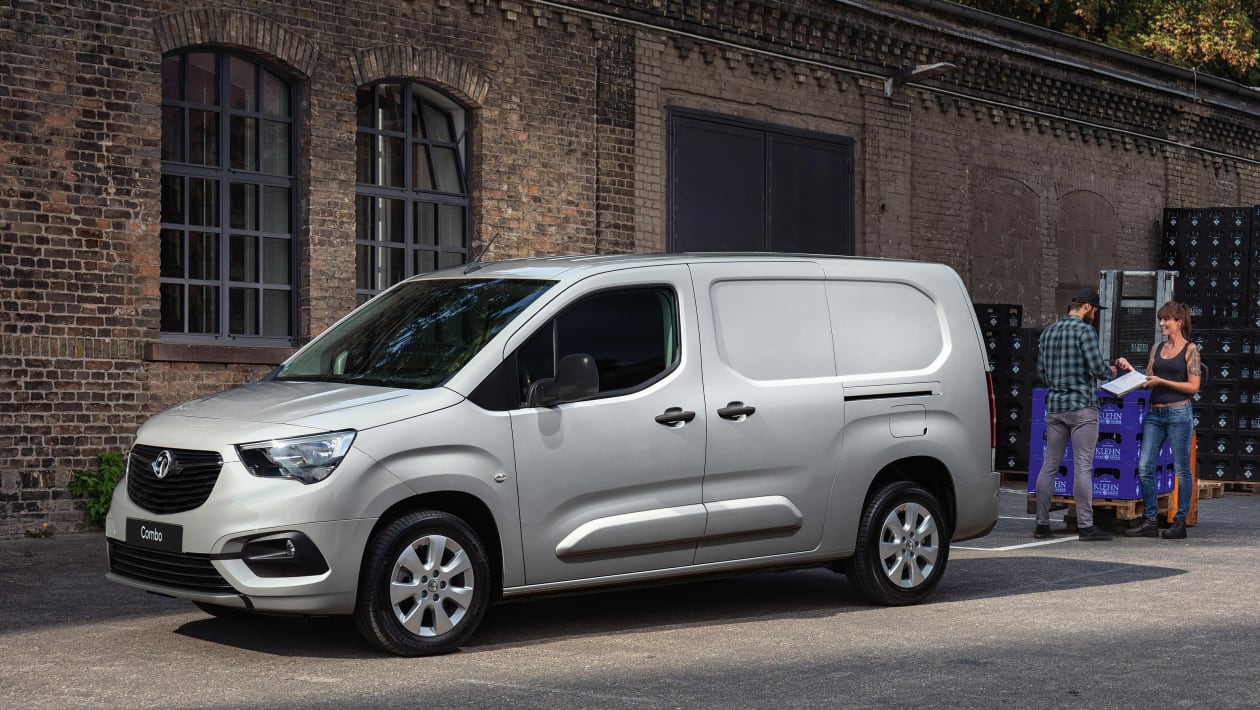
    Vauxhall has given its range of vans a shake up, introducing new Prime and Pro versions alongside a sporty GS trim level found exclusively on the Vivaro. The Prime and Pro trim levels will feature on the smaller Combo and the mid-size Vivaro while the larger Movano is offered in Prime guise only. 

    The updated Vauxhall van range is available to order now with deliveries expected later this year. Replacing the outgoing Dynamic, Sportive, Elite, and Edition trims, Vauxhall claims the new lineup “simplifies the Combo, Vivaro and Movano line up by offering customers clearer choice between vehicles as well as adding greater connectivity and improved technology”. The trim level switch also arrives alongside Vauxhall’s renaming of its electric vehicles. The e-Vivaro is now known as the Vivaro Electric. 

    As standard, all entry-level Prime models receive Apple CarPlay and Android Auto capability on the central touchscreen – an eight-inch unit on Combo models, seven of the Vivaro and five on the Movano. Automatic headlights and Vauxhall Connect are also standard on Prime vans, as are automatic windscreen wipers on the Vivaro and rear parking sensors on the Vivaro and Movano. 

    Above this is the Pro level on Combo and Vivaro models, which add sat-nav, a rear-view camera and rear parking sensors. The Combo Pro and Vivaro Pro also get Vauxhall ‘FlexCargo’ opening hatch in the bulkhead to help transport longer items. 

    The Combo Prime starts at £19,800 (excluding VAT), rising to £33,705 for the Combo Electric Pro. £22,265 (excluding VAT) will secure you a Vivaro in Prime trim level, whereas the larger Movano starts from £25,645 in Prime guise. 

    Check our pick of the best mid-size vans on sale here…


    Source link

  • This week’s issue of Auto Express

    This week’s issue of Auto Express


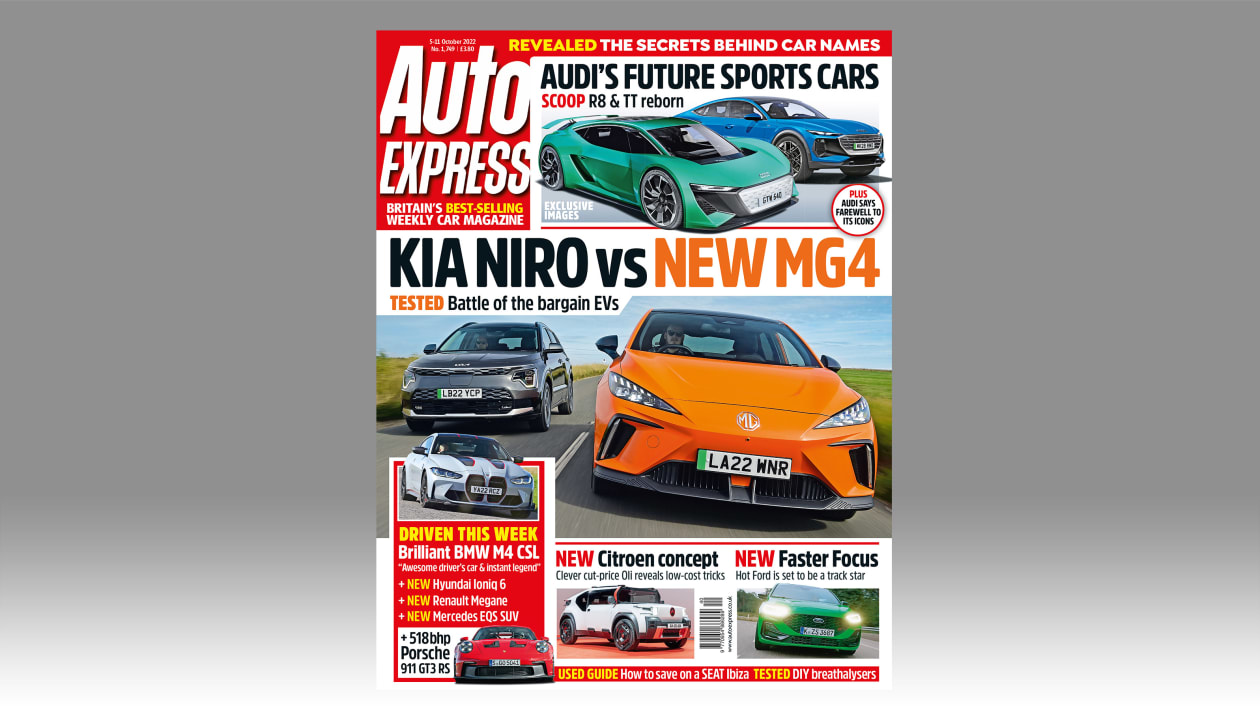
    In this week’s issue of Auto Express we have a battle of the bargain electric cars as the all-new MG4 goes head-to-head with the latest Kia Niro EV.

    We also reveal the future of Audi’s sports cars with exclusive images of both the R8 and TT replacements.

    Plus, we take a closer look at Citroen’s bold new Oli concept and have all the latest on the new Maserati GranTurimso, which has been unveiled with V6 and all-electric powertrains.

    In the drives section we get to grips with the brilliant BMW M4 CSL, get behind the wheel of Hyundai’s new Ioniq 6 saloon and try out the sensational Porsche 911 GT3 RS.

    As if all that wasn’t enough, we ask modern EV owners what they think of the ground-breaking BMW i3.

    How to buy Auto Express

    This week’s issue of Auto Express is on sale now and there’s a whole range of ways to get your hands on it! 

    Ways to read auto express

    Subscribe

    The best value available to our readers is an Auto Express subscription. You can try your first 6 issues for just £1, plus all new subscribers will receive a free welcome gift when they join.

    We deliver free, straight to an address of your choosing so you can be sure that you’ll never miss an issue. If you wish to continue your subscription after your trial ends you save a massive 47 per cent on the shop price, paying just £24.99 every 3 months.

    Our money back guarantee means that should you need to cancel at any point we will refund any unmailed issues, you can’t beat that value!  

    Click here to visit our secure online shop and subscribe to Auto Express…

    Digital editions

    If you prefer to read Auto Express on your desktop, tablet or phone, you can get the digital edition through our online partner Zinio. Single issues are available from £2.99 or a subscription for an entire year is just £90.99. 

    Click here to download Auto Express digital edition from Zinio…

    Single issues

    If you don’t want to get your next 6 Auto Express issues for £1 by subscribing (RRP £22), then you can still buy single issues in shops or online. This week’s issue of Auto Express is on sale now for just £3.80. You can find shops near you that stock the magazine by clicking here.

    If you can’t make it to the shops or are unable to find it somewhere convenient, you can buy individual print issues of Auto Express to be delivered directly to your door. 

    Click here to buy single issues of Auto Express


    Source link

  • Kia Niro named Carbuyer Car Of The Year 2023

    Kia Niro named Carbuyer Car Of The Year 2023


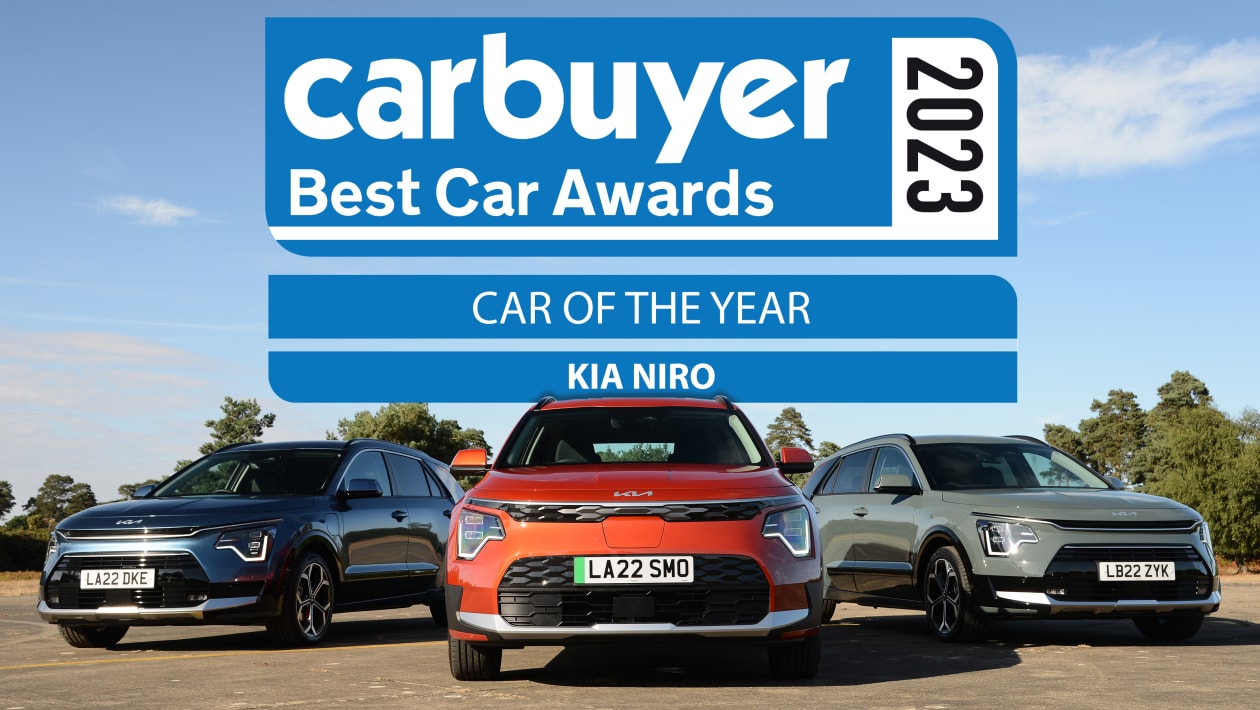
    The Kia Niro has been named Car of the Year for 2023 by Carbuyer, our sister publication. 

    The new Niro impressed so much that it also bagged the Best Small Family Car and Best Hybrid Car titles. Ever-important qualities such as practicality and impressive on-board tech were just two of the many reasons why the Niro found itself at the head of the pack, and the new model’s eye-catching design and easy driving experience were also highly praised. 

    The final factor that ‘sealed the deal’ for the Niro, though, is the choice of a hybrid, plug-in hybrid or fully-electric drivetrain, meaning there’s a model to suit every driver.

    Commenting on the Niro’s success, Kia UK President and CEO, Paul Philpott, said: “Following on from the ever-successful first-generation Niro family, the all-new version has earned a highly positive response in a short period of time. To be named Carbuyer’s overall Car of the Year and topping two other categories, just months after its UK launch is a remarkable achievement – and something we and our nationwide dealer partners take huge pride from.”

    This year’s annual awards ceremony saw Carbuyer name its favourite new cars for 2023 across 18 categories, and Auto Express’ Car of the Year, the Nissan Ariya, can be found among them, proudly carrying the title of Best Large Electric Car.

    Elsewhere it was a stellar performance from the Korean brands with the SsangYong Musso snatching the title of Best Pick-Up Truck from long-standing champion, the Ford Ranger. The Hyundai Tucson was also named Best Family Car.  

    Click here to read the full list of Carbuyer award winners or here for the Auto Express winners...


    Source link

  • New Mercedes A-Class facelift arrives with fresh look and tech upgrade

    New Mercedes A-Class facelift arrives with fresh look and tech upgrade


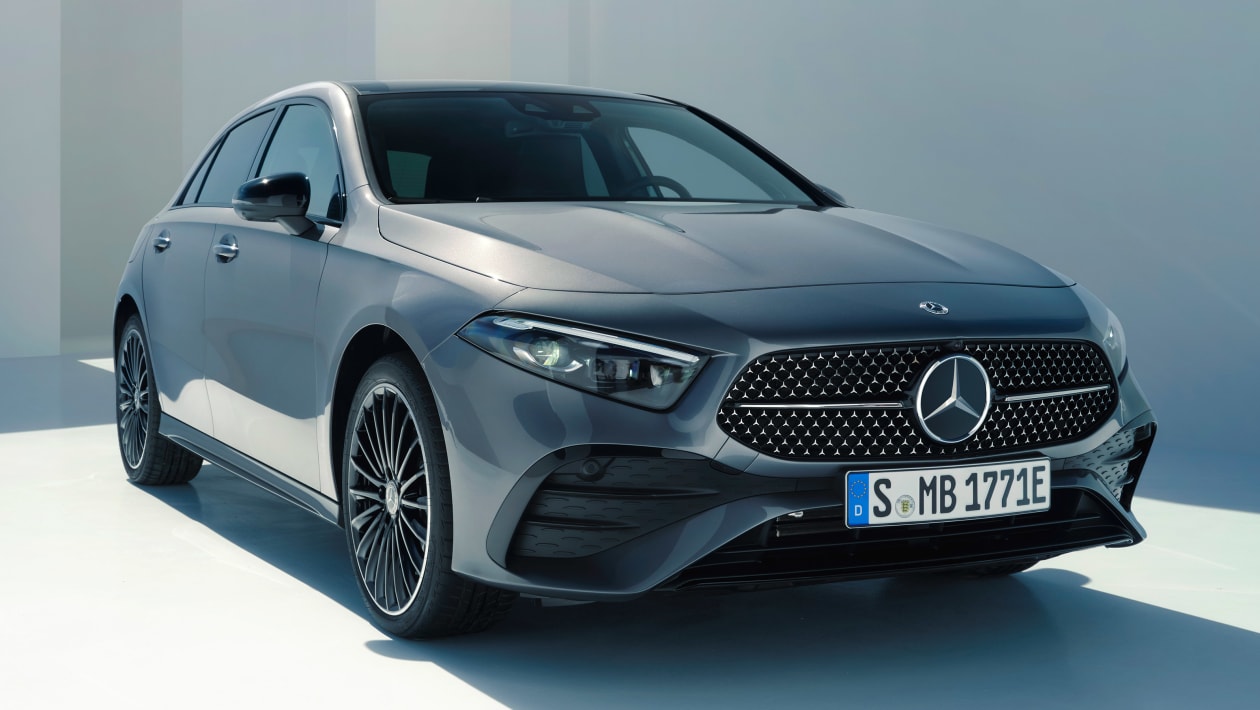
    Facelifting the A-Class is a huge deal for Mercedes, because even though it’s the smallest and cheapest model in its line-up, it’s also the most popular car from the German brand here in the UK. 

    The Mercedes A-Class was Britain’s fourth best-selling car in 2021 but has dropped out of the top 10 so far this year. Hoping to reinvigorate sales, Mercedes has given the A-Class plenty of tweaks inside and out to freshen it up for 2022 and beyond. 

    As suggested by previous spy shots, the exterior of the A-Class has been given a mild revision in both saloon and hatchback form. The front bumper gets a slightly different lower grille opening and the main grille itself has been reshaped – although the quintessential larger three-pointed star badge is still there. The bonnet gains two bulges for some added aggression. Around the side you’ll find a new selection of alloy wheels up to 19 inches in size, and to the rear there’s a new diffuser and brake light unit. 

    The new A-Class will once again rival the Audi A3 and BMW 1 Series in the premium hatchback market and a key battleground will be interior technology. The outgoing model featured a seven-inch screen and 10.25-inch display as standard, with a pair of 10.25-inch displays available as an option. Mercedes has retained this line-up for the facelifted model.

    What has changed is the infotainment system itself, because the car gets latest generation of MBUX. The display style can be changed between “Classic”, showing the usual relevant driver information, “Sporty” with a more pronounced rev counter and “Discreet’ for less information on show overall. 

    Extra equipment, such as an additional USB-C port and a fingerprint sensor, is also available and as you’d expect, there’s smartphone compatibility with Apple CarPlay and Android Auto Wireless. The MBUX upgrade also means the voice assistance is “even more capable of dialogue and learning”, claims Mercedes.

    There’s a boost in safety tech, with a new “Driver Assistance Package” adding lane-keep assist and active steering control. The new A-Class now features a “Parking Package” which supports bay parking and offers a 360-degree camera to help with parking using 3D images.

    Mercedes has given the facelifted A-Class some new powertrain options as well. Every petrol engine is now electrified, with a seven-speed or eight-speed automatic gearbox as standard. The new mild-hybrid system includes a 48V motor which Mercedes says “supports agility when starting off with an extra 13bhp”.

    Kicking off the range is the A 180 with 134bhp and 230Nm of torque from its mild-hybrid, 1.3-litre, four-cylinder petrol engine. Acceleration stands at 9.2 seconds for 0-62mph and the top speed is 134mph. Next up is the A 200, which uses the same engine as the A 180 but tuned to 161bhp and 270Nm of torque. 0-62mph is dealt with in 8.2 seconds and it’ll top out at 140mph. 

    Above those there’s the A 220 with the Mercedes 4MATIC four-wheel drive system. It uses a 2.0-litre, four-cylinder engine pumping out 188bhp and 300Nm of torque. That’s enough for a 7.1-second 0-62mph time and 146mph top speed. The 221bhp A 250 goes from 0-62mph in 6.3 seconds and on to a 155mph top speed. 

    Mercedes has decided to persevere with the diesel variants of the A-Class. The range starts with the A 180 d, which has 114bhp and 280Nm of torque from a 2.0-litre, four-cylinder unit – enough for a 0-62mph time of 9.9 seconds. There are also more powerful diesels in the shape of the 148bhp A 200 d and 188bhp A 220 d – both of which come retuned versions of  the same engine. 

    As for the plug-in hybrids, the A 250 e’s powertrain has been fettled to improve power, says Mercedes. There’s 7bhp more (now 161bhp in total) and 270Nm of torque on offer. That’s enough for a 7.4-second 0-62mph time in the hatchback and 7.5 seconds for the saloon. 

    Efficiency has also been upgraded with this facelift. The A 250 e can now reach 50 miles of pure-electric running (51 miles for the saloon) and charging has been upped from 7.4kW to 11kW – although this three-phase setting won’t be much use to most UK customers. Mercedes claims the DC charge to 80 per cent is unchanged, with an expected charge time of 25 minutes.  

    Prices will be revealed in the coming months, but we expect a small increase on the current car’s £30,750 starting price.

    Now read all the latest news about the next-generation Mercedes E-Class


    Source link

  • UK petrol and diesel prices: unleaded falls, but not by enough

    UK petrol and diesel prices: unleaded falls, but not by enough


    The average UK pump price of petrol fell by 6.69p to 162.89p per litre in September 2022, constituting the biggest monthly price drop since the year 2000. The cut saved drivers an average of £3.69 on a tank of unleaded.

    That said, analysis from RAC Fuel Watch suggests drivers should have benefited from a further 10p cut, but retailers instead chose to take a larger profit margin than normal.

    Nevertheless, it now costs less than £90 to fill a typical family car’s 55-litre fuel tank with petrol for the first time since May.

    The average price of diesel also reduced in September by 3.5p to 185.16p per litre. As such, the cost of filling a typical family car with diesel has fallen £10.41 to £99.09.

    The average price of petrol at the ‘big four’ supermarkets (ASDA, Morrisons, Sainsbury’s and Tesco) fell by 6.6p per litre to 161.30p in September, but this is only 1.5p lower than the UK average, whereas normally it’s around 3.5p cheaper. Supermarket diesel, meanwhile, fell by 1.4p to 178.56p – 2p less than the UK average drop of 3.58p. Again, diesel is also normally 3.5p cheaper at supermarkets than other fuel stations.

    RAC fuel spokesman Simon Williams said: “Despite September seeing the sixth biggest ever drop in the price of petrol, drivers really should have seen a far bigger drop, as the wholesale price of delivered petrol was around 120p for the whole month. This means forecourts across the country should have been displaying prices around 152p, given the long-term margin on unleaded is 7p a litre.”

    fuel pump

    He added: “As many drivers will have noticed, there are lots of smaller forecourts which are now selling fuel much cheaper than the supermarkets. We would urge everyone to shop around for the best deals rather than simply assuming the supermarkets are the lowest because they have been in the past.”

    What makes up the price of UK fuel?

    The price of fuel can be divided into three sections; the taxes imposed by the Government, the costs of drilling, refining and transporting, and the profit margins for the fuel companies.

    For petrol, diesel and bioethanols, the Government gets around 65 per cent of the overall cost through fuel duty and value added tax (VAT). The fuel duty represents the fixed price of fuel – it stays the same regardless how much overall oil prices fluctuate. Currently, the Treasury adds 57.95 pence to each litre of fuel through fuel duty, and another 20 per cent through VAT. How much you pay in VAT depends on how much fuel you purchase.

    The second biggest chunk comes from the wholesale costs of the fuel itself. The wholesale cost is a combination of currency exchange rates, global oil prices, and even domestic supply and demand.

    Why is supermarket fuel cheaper than an independent forecourt?

    Supermarket forecourts usually offer the cheapest fuel prices and this is because of the market power supermarkets hold. Companies like Asda, Tesco, Sainsbury’s and Morrisons are all in competition with one another, so they keep fuel prices as low as possible hoping that when motorists come to fill their tank, they might do their weekly grocery shopping, too. 

    There are persistent rumours that supermarket fuel contains fewer additives and is of lesser quality than fuel from traditional forecourts, but there’s little hard evidence of this. All fuel sold in the UK has to abide by the standards set in the Motor Fuel Regulation. 

    Why is fuel so expensive on motorways?

    Motorway fuel stations argue the reason their prices are higher is that many of them are open 24 hours a day and offer more services than a regular forecourt. Motorway fuel stations also pay high rent prices for the buildings they operate.

    In more remote areas, fuel is often more expensive because of the higher transport and supply costs, but according to RAC fuel spokesman Simon Williams, this doesn’t apply to motorway stations: “We can see no reason why motorway fuel should be so much more expensive. In fact, arguably it is much easier from a delivery point of view than it is getting fuel to urban filling stations.”

    Why is diesel more expensive than petrol?

    Although diesel and petrol are taxed the same by the Treasury, historically diesel has been more expensive than petrol, as domestic refineries have struggled to meet demand. This has forced the UK to import diesel from other countries at a greater rate than petrol. In addition, diesel prices are pushed up by the cost of the additives that go into the fuel.

    Furthermore, the gap between UK petrol and diesel prices widens during the winter. The end of the US “driving season” means retailers have a surplus of petrol they can’t export, so they sell it here at a lower price. Diesel demand, meanwhile, increases across continental Europe, where the fuel is commonly used in heating oil.

    Recently, the influx of cheap diesel from countries like Saudi Arabia has turned the tide, swinging diesel wholesale prices closer to that of petrol, and bringing the pump price down with it. However the fact that we get a higher percentage of diesel from Russia than petrol means the advantage has swung the other way again.

    What’s your view on fuel prices in the UK? Do we pay too much for our petrol and diesel? What would you do about it? Join the debate in our comments section below…


    Source link

  • New Mercedes-AMG A 45 receives new look and updated tech for 2022

    New Mercedes-AMG A 45 receives new look and updated tech for 2022


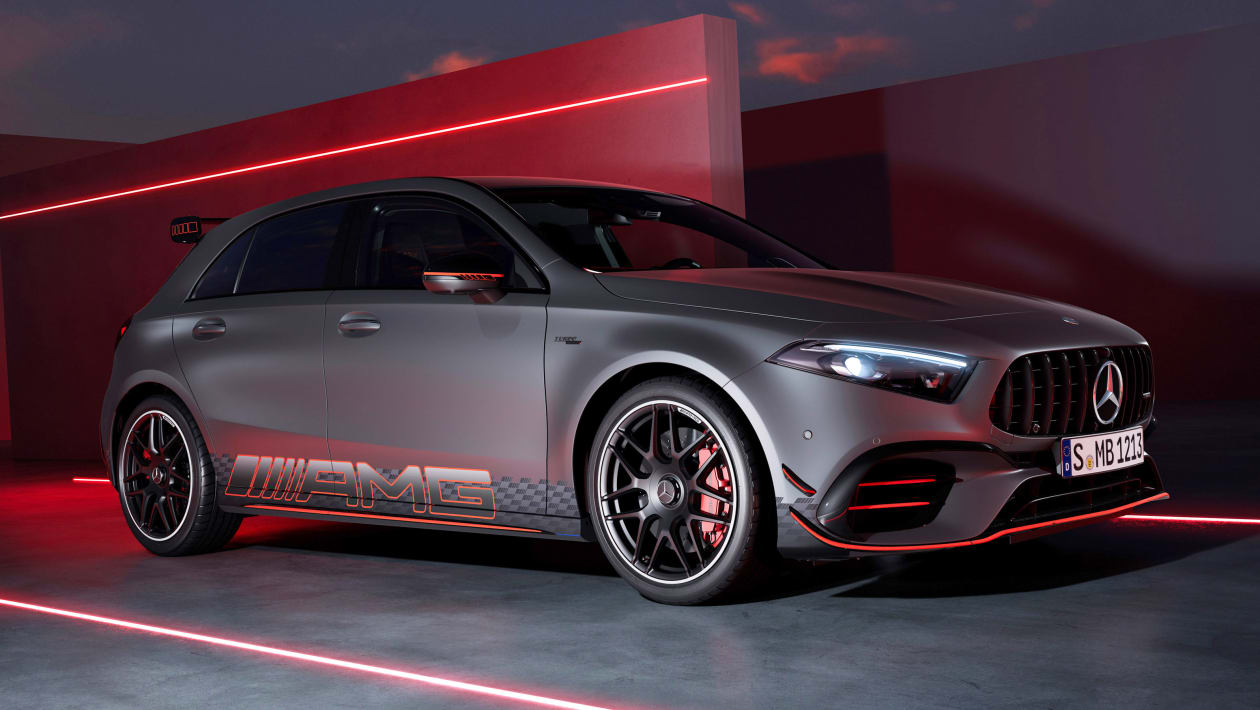
    Mercedes has given its A-Class a facelift for 2022 and that means revisions for the AMG-fettled A 35 and A 45 performance hatches. Although the mid-life refresh doesn’t see any changes in the way of performance figures, Mercedes has worked on the exterior design of the A 35 and A 45, while giving both more equipment as standard.

    We’ve seen the facelifted A 35 and A 45 testing for a while, so the revisions to the bodywork aren’t too much of a surprise. Mercedes has played it safe with the update, adding new front headlights, a redesigned AMG-specific ‘Panamericana’ radiator grille and a new bonnet badge. 

    The front bumper receives a new lower lip design in connection with the standard car’s revised side air intakes, above it we can see new “power bulges” on the bonnet. A new 19-inch alloy wheel is now available and towards the rear we can see the facelifted A-Class redesigned rear lights and lip spoiler. Circular exhaust pipes distinguish the A 35 model from the A 45 – which feature quad-exhaust tips. 

    Inside the new AMG hot hatches there’s the AMG Performance steering wheel – now offered as standard and AMG performance seats – trimmed in sage grey. Like the standard A-Class, the A 35 and A 45 both get the latest MBUX system, featuring improved voice assistance and new driver’s display menus.

    The arrival of the facelifted Mercedes-AMG A 45 coincides with the launch of the AMG Street Style Edition. The limited edition model is based on the A 45 S and finished in “grey magno” paint with orange accents. The Aerodynamics Package is included – adding the rear spoiler and front canards. Inside, the AMG Street Style Edition comes with black Performance seats, stitched in orange and an ‘A 45 S’ logo is embroidered onto the headrests. 

    Powering the A 35 is a hybridised version of the old car’s 2.0-litre, turbocharged four-cylinder. Mercedes says the new 48V auxiliary power supply adds an extra 13bhp on start up, however total power figures remain the same at 301bhp and 400Nm of torque. The performance numbers are also unchanged – 0-62mph takes 4.8 seconds in the saloon, with the hatchback taking 4.7 seconds. Top speed is limited to 155mph.

    The AMG A 45 keeps its title as the most powerful hot hatchback on sale, with its turbocharged 2.0-litre four-cylinder petrol engine chucking out a massive 415bhp and 500Nm of torque. Like in the A 35, power is sent to all-four wheels – resulting in a 3.9-second 0-62mph time and a de-limited top speed of 168mph. 

    Pricing hasn’t been announced yet for either model, but it’s likely that the A 35 will increase from its current starting price tag of £43,440. The A 45 just received a bump in price to £60,628 earlier this year, so we’ll see if the facelift brings another price increase when it launches in the coming months. 

    Now read our list of the best performance cars


    Source link

  • New 2022 Mercedes B-Class facelift unveiled with subtle design tweaks

    New 2022 Mercedes B-Class facelift unveiled with subtle design tweaks


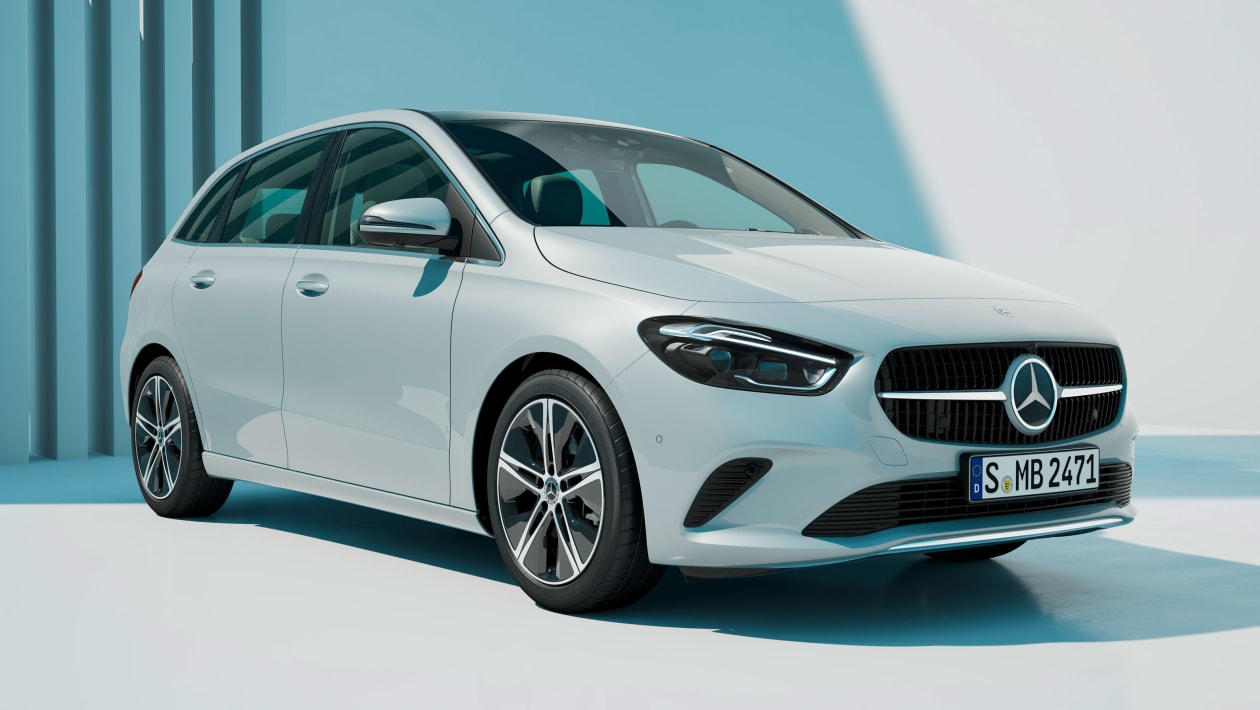
    The Mercedes B-Class isn’t exactly swamped with rivals, but with BMW releasing its second-gen 2 Series Active Tourer this year, Stuttgart needed to fight back. Meet the new, facelifted Mercedes B-Class, which arrives with subtle design tweaks and electrified engines to fight for class honours in the MPV sector. 

    The styling changes are difficult to spot at first glance, but the LED headlights have been redesigned, and the car’s wide front grille is now made up of tiny three-pointed star motifs. Four new wheel designs are available with the facelifted B-Class, and the LED tail lights have also received a makeover. 

    Inside, the overall cabin design is the same as in the outgoing car, with piano black elements contrasted against silver switchgear and turbine-style air vents on the dashboard. The facelifted model does include more standard equipment, however, with an extra USB-C port, a reversing camera and a new nappa leather double-spoke steering wheel. 

    The new B-Class continues to offer a dual-screen infotainment setup, with a 7-inch digital instrument panel coupled to a 10.25-inch central touchscreen. For extra cost, the instrument display can be upgraded to a 10.25-inch unit, and new graphics for the MBUX interface bring the system into line with the latest Mercedes models. 

    The system also offers improved responsiveness and the addition of a fingerprint sensor – set to be available from early 2023 – which is used for driver recognition and authorisation. The “Hey Mercedes” voice assistant is also more feature-rich, with a new tour guide function that provides information about landmarks and points of interest as you drive. It’s only available in Germany for the time being, though. 

    Elsewhere, the facelifted B-Class receives new Artico faux leather upholstery colours, with the option of suede trim and red stitching for range-topping AMG Line models. Certain trim elements have been updated with sustainability in mind, too, including recycled fabrics for the seats.

    Mercedes also cites improvements to the car’s driver assist systems, but the key changes are under the bonnet of the new B-Class. Diesel power has been ditched and the entire range is now electrified to some degree, with a choice of mild and plug-in hybrid petrol engines. The mild-hybrids utilise a 48V starter-generator unit that recuperates energy under braking for improved efficiency and smoother stop/start transitions in traffic. The system can also provide an extra 13bhp while accelerating.

    Buyers can choose between four mild-hybrid petrol models, beginning with the entry-level B 180. This offers 134bhp from its 1.3-litre four-cylinder motor, with the 161bhp B 200 equipped with a more powerful version of this engine. A pair of 2.0-litre, four-wheel drive options sit above this, in the form of the B 220 4MATIC and the B 250 4MATIC. These provide 187bhp and 221bhp respectively.

    The B 250 e plug-in hybrid tops the range, pairing a 1.3-litre petrol engine with an electric motor for a total output of 215bhp. This variant benefits from a revised battery and motor setup compared with the previous plug-in model, along with a faster 11kW AC charging rate. With 22kW DC charging capability, the B 250 e can be topped up from 10 to 80 per cent in 25 minutes.

    Pricing is yet to be announced for the new B-Class, but given that electrified engines feature across the board, we expect a fair uplift over the current car’s £33,775 starting price. 

    Click here for our list of the best MPVs on sale right now…


    Source link

  • New SsangYong Rexton Ultimate Plus available from £45,495

    New SsangYong Rexton Ultimate Plus available from £45,495


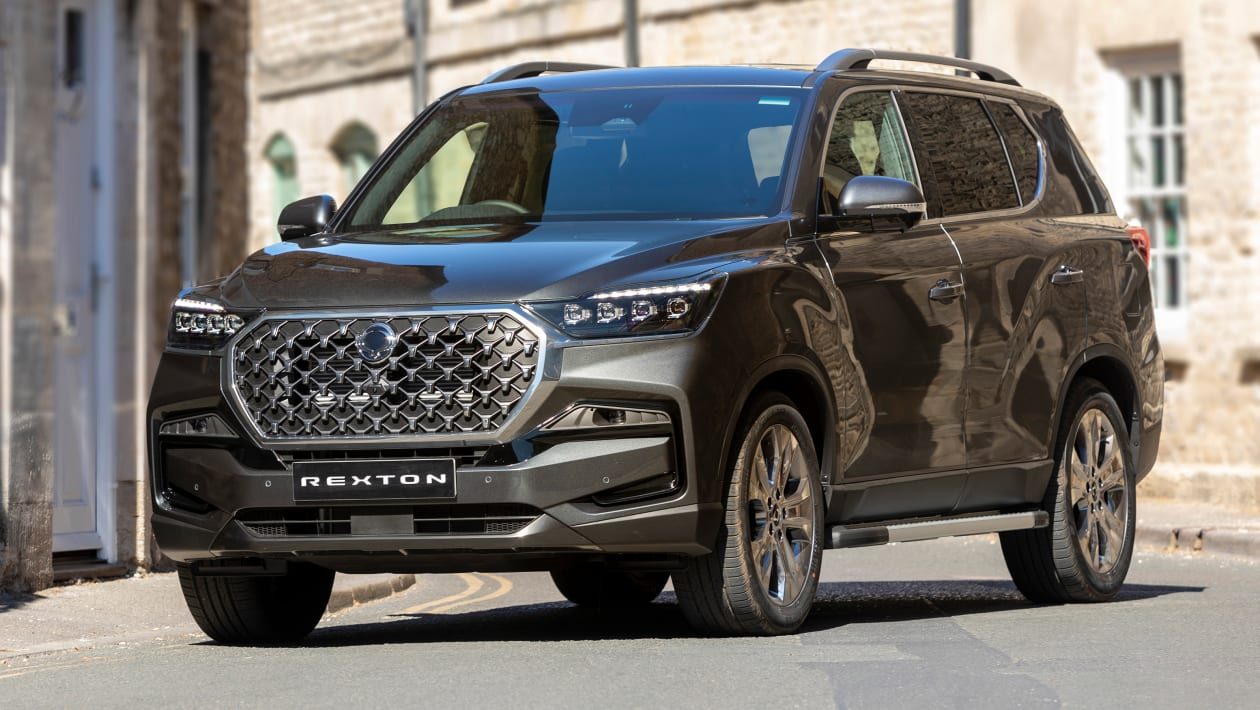
    The Rexton sits atop SsangYong’s SUV lineup and now the Korean firm has bestowed it with a new Ultimate Plus trim level which “adds even more luxury, yet retains value for money”. 

    SsangYong launched the facelifted Rexton last year, which included revised bumpers front and rear and more technology as standard. Improving on the two-strong Ventura and Ultimate Rexton lineup is the Ultimate Plus – which is available to order now from £45,495. 

    For the extra £4,715 over the Ultimate, the new Ultimate Plus features 20-inch alloy wheels, auto-dipping mirrors, a powered sunroof and metallic paint. Inside, you’ll find quilted leather and suede seats, a 3D 360-degree monitoring camera, a memory driver’s seat and a wireless phone charger. 

    The 12.3-inch driver’s display is also standard, as is the 9.2-inch touchscreen with Apple CarPlay and Android Auto connectivity. The Ultimate Plus is still a seven-seater and for the rear-most seats, there’s third-row air-conditioning.  

    Mechanically, the Rexton Ultimate Plus is unchanged. Only one powertrain is available now – a 2.2-litre turbocharged diesel with 199bhp and 441Nm of torque. 0-62mph takes 11.9 seconds. Power is sent to the rear wheels during normal driving and should the front lose traction then the four-wheel drive system is engaged. A new seven-speed auto from Hyundai replaces the old seven-speed auto from Mercedes found in the pre-facelift model. 

    The Rexton Ultimate Plus also receives SsangYong’s lengthy seven-year/150,000-mile warranty.

    Check out our list of the best SUVs on sale here…


    Source link