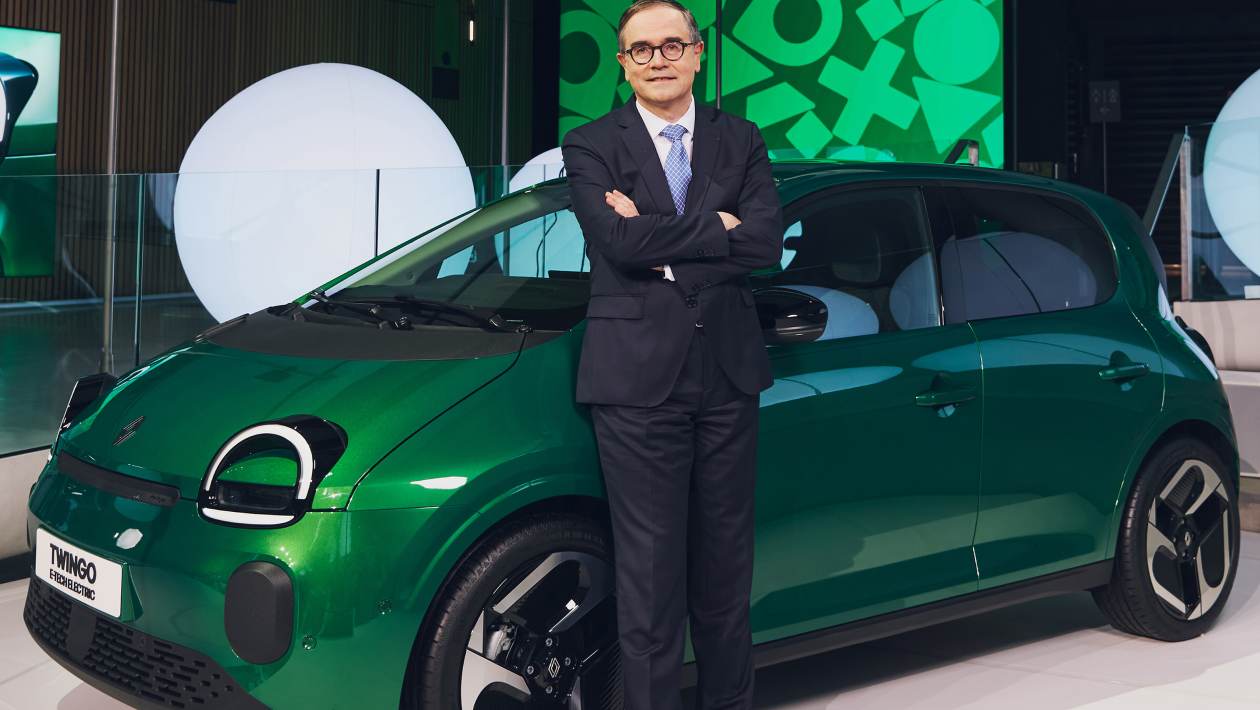
“In Renault, we are too cyclical,” he explained. “After a successful line up we suffer more. [So it’s] my obsession [that we launch] a new bunch of products as successful as today’s.”
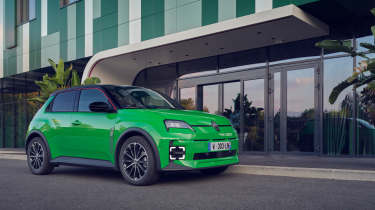
He has a point: Renault followed up the avant-garde Mégane Mk2 with the forgettable Mk3, and no subsequent Twingo has so far lived up to the original. Provost is in the studio twice a week overseeing the next generation of cars, design chief Laurens van den Acker told us. “The CEO knows [product] is what has saved our ass the last few years, and he’s been appointed because he wants to continue the dynamic. This is extremely important, because it can get diluted very quickly.”
2. Sell more large cars – based on a new platform
Provost’s focus will be on larger, more profitable (C-segment) cars; despite this area being a Renaulution objective, the electric Megane hatch and Austral SUV haven’t delivered breakthrough sales.
“In the next mid-term plan, we will continue to invest in C-segment cars and technology. We [will] propose a new platform to grow in this segment,” the boss told Auto Express. Expect this new vehicle architecture to underpin the replacements for all Renault’s mid-size and large cars, as well as the production version of the sleek, spacious Embleme concept car – tipped to be the next Renault Espace.
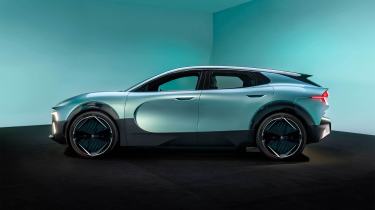
Engineering work on the new platform is well underway with the first cars due for launch in 2028, and a key aspect will be powertrain flexibility, another staple of the upcoming FutuREady strategy.
3. Become number one in hybrid, while continuing the EV push
While Provost vows Renault remains committed to electric, the stuttering consumer transition demands a pragmatic pivot to offering new hybrid engines. So the new architecture will accommodate both pure electric and hybrid powertrains.