“It really helped shape the brand identity,” he said. “Over the last 10 to 15 years, Kia has consistently, model after model, improved quality, drivability, safety, and design. The Stinger was a kind of manifesto that showed what our brand could do. In an EV era, this is what we’d like to do.”
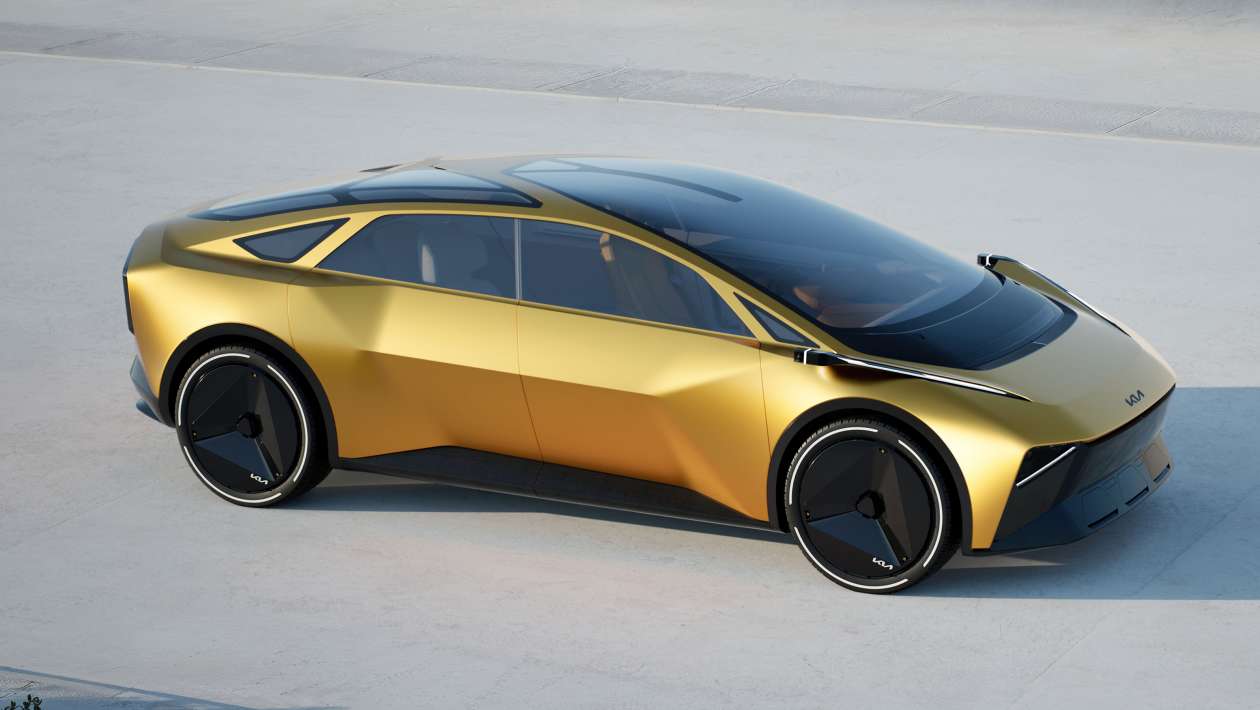
While a production version of the Vision Meta Turismo concept would bring a different shape to the current Kia EV line-up, it does share some design language with the firm’s latest electric cars and reflects its ‘Opposites United’ philosophy.
Kia’s ‘Star Map’ lighting is prevalent at the front, although the positioning of the headlamps high up on the bonnet is an interesting move. The rear also has thin LED lighting structures – something we’ve seen before on the likes of the EV3, EV5 and EV9.
Next-generation, driver focused cabin
We can certainly see an element of driver focus with the cabin layout – albeit one adapted for the digital age. The driver gets a bespoke seat along with a joystick control mixed with a yoke-style steering wheel. There’s also an augmented reality head-up display that shows virtual graphics “floating above the road” according to Kia.
“The interior designers came up with some amazing ideas,” Habib told us. “There is not one seat that is similar to another; the driving seat is like a gaming rig. We felt it was important to understand how younger generations perceive sports-car driving and how it is influenced by their digital experience.