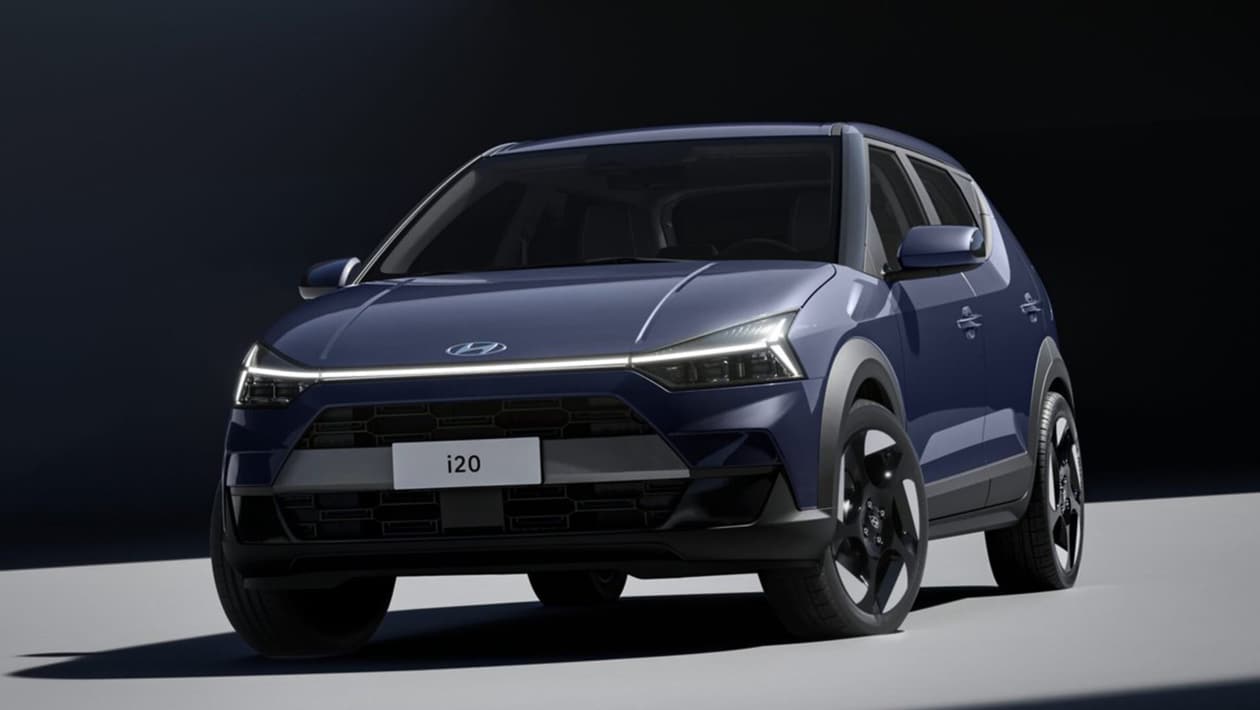
For Europe, the front and rear ends are set to change, to give a more technical look.
At 4,130mm long, 1,495mm tall, 1,780mm wide, and packing a wheelbase of 2,580mm, the new i20’s dimensions are within millimetres of Hyundai’s existing small SUV, the Bayon. However, a new generation of the Bayon is also due soon and, based on what we’ve seen from test prototypes, it’s going to morph into a boxier, baby SUV offering even more space and practicality.
Interior and tech
Hyundai says its designers focused on technology and practicality when creating the new i20’s interior. The Brazilian car’s cabin is more minimalist than the current model’s, with fewer buttons, although the air-conditioning is operated by physical controls. That dashboard has been designed specifically to maximise space up front, helped by the use of vertical air vents that leave room for storage options and a pair of big displays.
How will it change for Europe? “Our future interiors will be more comfortable, ergonomic and richer in perceived quality,” says European chief designer, Eduardo Ramirez. Expect the i20 to take inspiration from the Ioniq 3 electric hatch, and redeploy its almost-15-inch central touchscreen running the new Pleos Connect human-machine interface. Built on Android Automotive software, the screen is segmented Tesla-style, with car-related functions (such as ADAS) on one side and a big area of real estate for navigation, media or the like on the other.