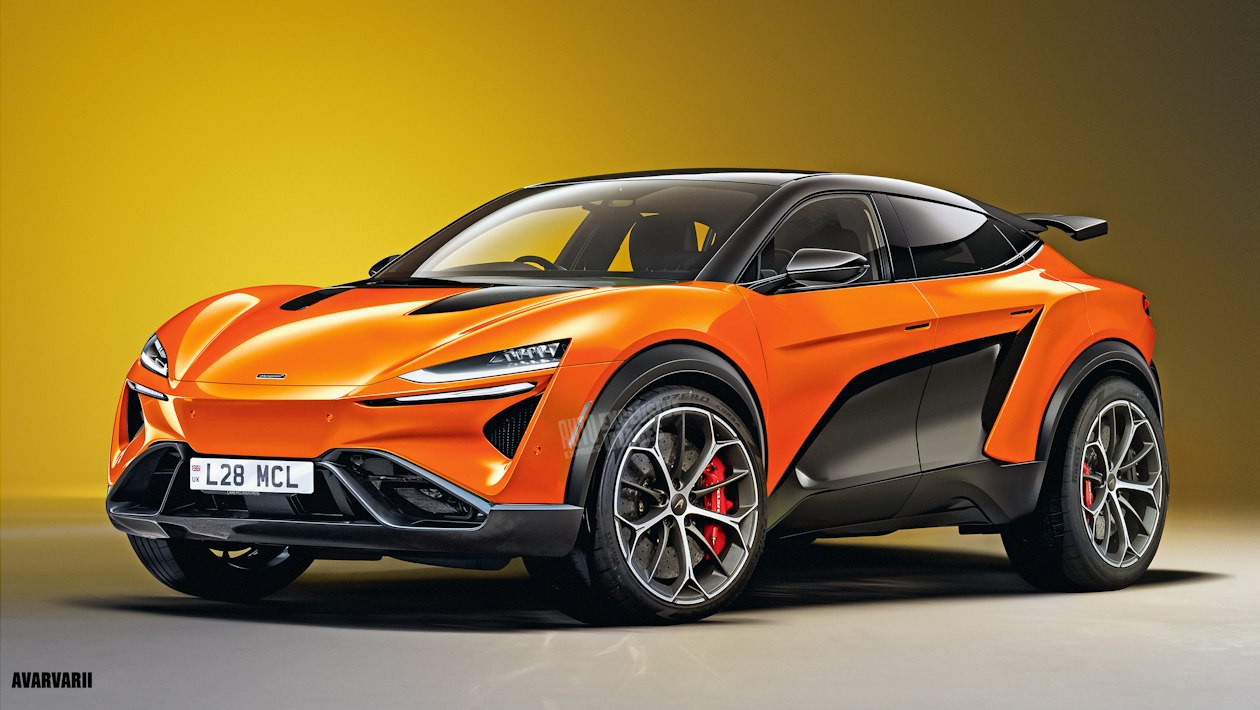
Leiters’ vision was for a swooping, sporty SUV that would be priced above £200,000 and take on low-volume, high-price rivals, the Aston Martin DBX and Ferrari Purosangue.
The SUV was set to be powered by a detuned version of the W1 hypercar’s 1,234bhp drivetrain, which blends a 4.0-litre twin-turbo V8 with a high-output electric motor, and McLaren was in talks with global automotive players to buy in or co-develop a suitable vehicle architecture.
It categorically was not a pure electric SUV: sources have told Auto Express that McLaren’s dealer base canvassed customers and found little to no demand for one. That’s a view shared by the current McLaren Group Holdings CEO Nick Collins.
“I believe every brand must have a multi-propulsion future,” Nick Collins told Auto Express at the July 2025 Goodwood Festival of Speed. “The pace of regulatory change and consumer adoption is different in different parts of the world. Are we going to make McLaren an all-electric brand? Absolutely not.”
Initial work on the mighty McLaren was done under chief creative officer Alister Whelan, who spent more than 20 years at Jaguar working alongside Ian Callum on brilliant designs including the I-Pace, F-Type and 2009 XJ. Now ex-Ford designer Kemal Curic is in charge of making the SUV a reality.
Until the acquisition of McLaren Automotive (plus a minority stake in the brand’s Formula 1 team), former Jaguar Land Rover R&D boss Collins was establishing British autos engineering start-up Forseven for CYVN. It had already acquired the technology division of Gordon Murray Automotive and a 20 per cent stake in Chinese electric car maker Nio. “We have access to certain Nio technologies with our licence. And that’s an amazing opportunity, because, frankly, some of the best automotive technology in the world is in China,” Nick Collins told us.