To get an accurate valuation on a specific model check out our free car valuation tool…
The fresh interior features a bigger infotainment system and some expensive-feeling touches, but it can’t completely hide its Audi origins
Pros |
|
Cons |
|
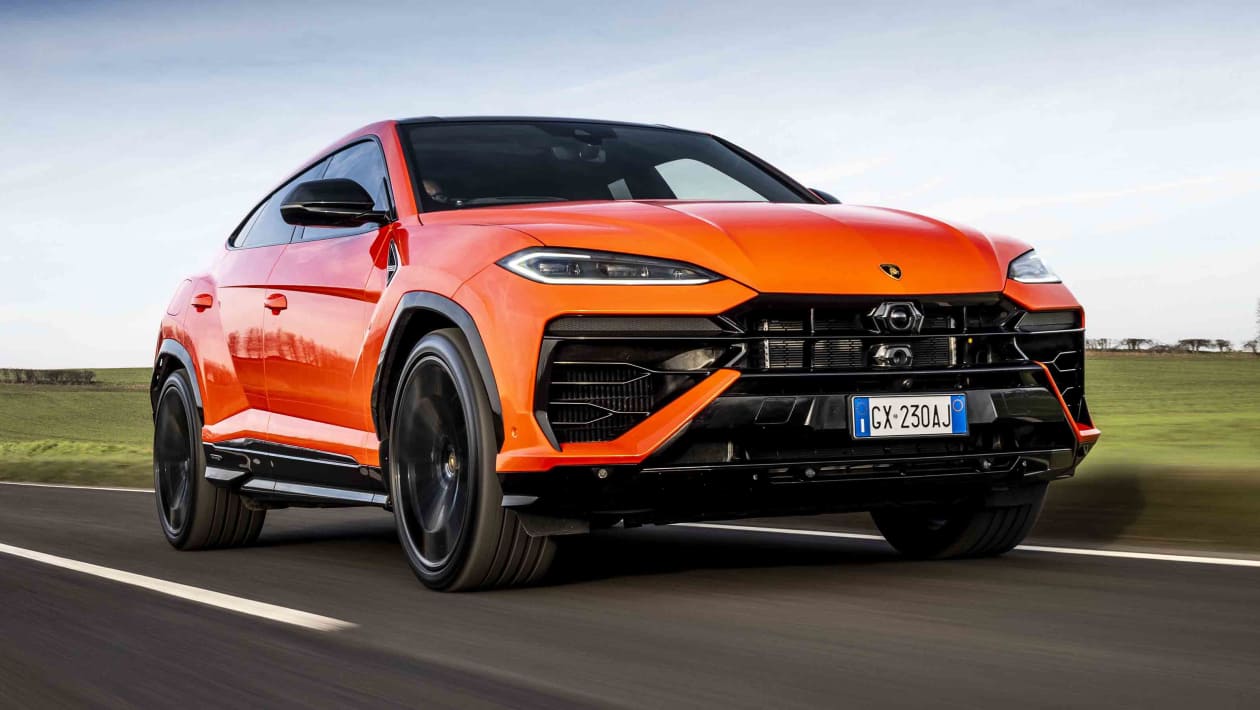
Alongside the substantial changes under the skin, the Lamborghini Urus received some fresh styling and interior elements when the SE model was introduced. Adaptive matrix LED headlights now sit on either side of a new bonnet that now extends right down to the front-end’s air intakes. This removes the unsightly part line of the previous model, making the whole car look much cleaner.
The rear end is also new, apparently inspired by the second-generation Gallardo with a full-width artificial grille section and a change of number plate location. The effect is subtle, but also effectively cleans up the overall design.
As you’d expect for a car with a starting price north of £200k, the basic equipment is all there in the Urus SE, and this includes:
- 21-inch alloy wheels
- Carbon-ceramic brakes
- 12.3-inch driver’s display
- 12.3-inch central touchscreen
- Wireless Apple CarPlay and Android Auto
- Blind-spot monitoring
- Panoramic camera system
- Matrix LED headlights
As we said, the Urus SE we drove cost £300k thanks to its exceptionally vivid Ad Personam paintwork, CorsaTex and carbon-fibre interior packages, 23-inch wheels, contrasting roof colour, and Bang & Olufsen sound system. However, there are plenty of other options available, from a titanium exhaust system to a roof box and bike carrier.
Interior and dashboard design
Inside, Lamborghini has fitted a brand-new dash to accommodate the larger 12.3-inch display. You still get another touchscreen below that for all the climate controls, but the touch-sensitive controls that used to sit between them have been replaced with a set of toggles, which are lovely to use.
Materials and build quality
Most interior elements are also covered in expensive-feeling leather or, in the case of our test car, CorsaTex, which is Lamborghini’s version of Alcantara. This gives the whole cabin a definite uplift over most SUV rivals, but there are still too many elements from Audi, including the steering wheel controls, indicator stalks and window switches. These are all well-built, but a little disappointing given the price point.
Sat-nav, stereo and infotainment
The new touchscreen has been borrowed from Porsche and Bentley, and is now larger, at 12.3 inches. This sits above an Audi-sourced lower touchscreen for the heating, ventilation and seat controls, which works relatively well for these secondary functions. However, while the hardware is improved, with more digital real estate and better graphics, the interface is still tricky to navigate.